Noutăți
5 martie 2026
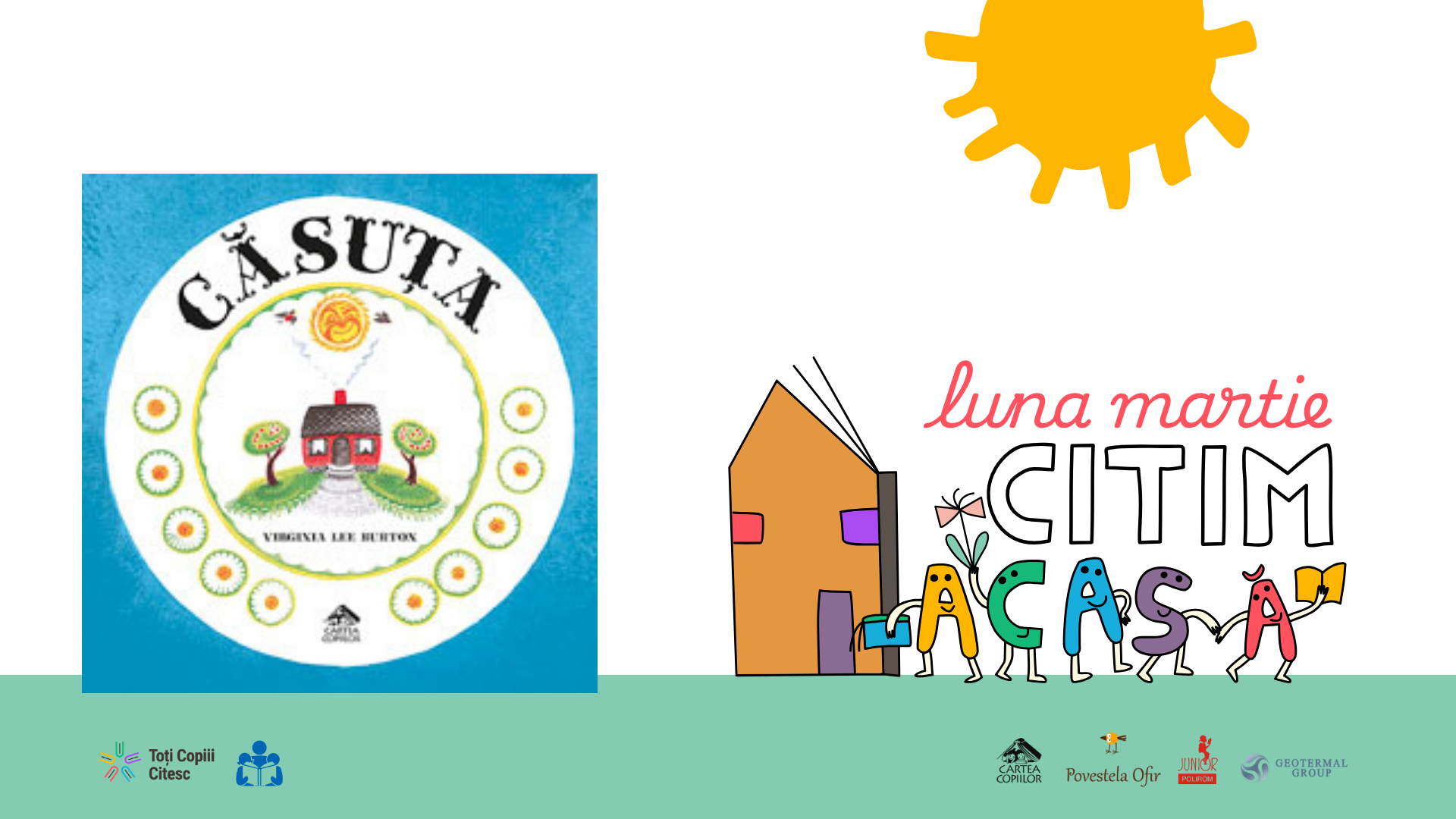
Welcome to #ReadatHome 2026!
A Letter from Brandi Bates, Citim Împreună România (Reading Together Romania)
I am so happy to be here, and I’m glad that you are here with me as well! I recently read a beautiful article* written by a woman whose profession is to be present at both births and deaths. As a certified midwife, she accompanies women in labor, and in her hospice work she stands alongside families while their loved ones are nearing the end of life.
Describing both of her roles, she says that everything she does—both at the beginning and at the end of a life—is to help those involved trust the process: the process of birth and the process of death. She carries a deep trust in both of these processes, and when the families she accompanies begin to trust them as well, fear and anxiety fade away, and birth and death are free to do what they are meant to do—in love, in calm, and even in joy.
It turns out that this is exactly how I feel about Read Aloud. I have a deep trust in the process of reading aloud. And I hope that this journey together throughout the month of March will help you cultivate that trust and develop your ability to create spaces where the process of Read Aloud can be trusted and therefore fully free to do all the wonderful things it is capable of doing for a child—and for you.
But what does it mean to “trust the process” when it comes to reading aloud? It is easier for me to begin with an example of what I believe it does not mean.
Not long ago, I attended the launch of a picture book written and illustrated here in Romania… The author began to rush: reading much faster, skipping sentences, then entire pages. I’m not sure she finished the book. What I noticed was that she had stopped trusting the process of reading aloud, and as a result, we—the audience—did not receive all the benefits of a story read aloud from beginning to end. The read-aloud was no longer free to work its magic.
I believe that most of the mistakes adults make when reading aloud to children come down to a lack of trust in the process. Reading too quickly, reading with an uncertain voice, not pausing long enough for children to “read” the illustration. Or allowing distractions to interrupt the process.
On the other hand, trust can lead to even more trust. Next week I will talk about the reasons behind my trust, but for now I would like to leave you with these questions: Do you trust the process of Read Aloud? Why or why not? I invite you to send me your thoughts by email***.
With deep trust in Read Aloud,
Brandi, Citim Împreună România
A Sense of Place*: The Little House: Her Story by Virginia Lee Burton
Houghton Mifflin Company, U.S.A. 1942; Căsuța, translated by Andreea Demirgian, Editura Cartea Copiilor, 2014.
Published during World War II, “The Little House” by Virginia Lee Burton (VLB for short) has offered shelter, “a sense of place”, to children, and their grownups, all over the world for over 80 years.
Born to highly educated and artistic parents in 1909, Virginia (called Ginee by her friends) could have been just about anything she wanted: a dancer, a sculptor. She became a mother, a children’s book author and illustrator, and a designer**. And she was extremely talented and generous in them all!
Shortly following the Great Depression in America, VLB may have turned to children’s books for economic reasons, but it was an organic, inspired choice nonetheless. All through her childhood, instead of toys, her father had bought her and her siblings beautiful books at holidays, and then read them aloud to them.
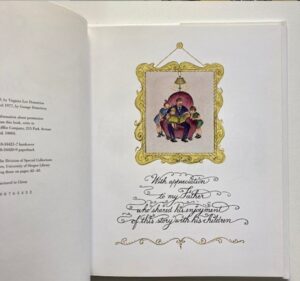
Dedication to her Read Aloud father, “The Emperor’s New Clothes.”
Her first book about a piece of dust, though she and her friends believed it to be very clever, received 13 rejections. Surprised, she read it aloud to her children and they fell asleep. That is when she learned her most important lesson: her two sons would be her most trusted critics from then on.
Children’s literature is unique in that those who create children’s books do so for an audience of which they are not a member. VLB’s new standard for the books she was creating was that if she could read aloud the same text for a month straight, and her two sons continued to be engaged and delighted, that she was making a good children’s book. As she was reading along, if she noticed them losing interest, she knew she needed to pep things up there.
The Little House won the Caldecott Medal (annual honor for best illustrated picture book, U.S.A.) in 1943, and is considered by some to be one of the most experimental Caldecott Medal winners of all time***. Choosing to make a book where the main character is a house, and a house that does not move for almost the entire book, was a highly experimental and bold move. In this and many other ways, VLB advanced the art of picture books, far ahead of her time.
The Little House is a great place to try to grow one’s trust in the process of Reading Aloud. With 1,388 words (English version), it is longer than most modern day picture books. To grow trust: read slowly, take your time. VLB put so much detail in the illustrations that you will finish reading the text, even slowly, before your child is finished “reading” the corresponding picture. (I recommend reading all the way through, slowly, and then going back through to ask your child what they “read” in the images. You were probably busy looking at the text, so they will have noticed things about the story that you missed.)
With painstakingly beautiful design and timeless, universal themes, Virginia Lee Burton has created one of the most beloved picture books of all time, and one that is as needed today for its sheltering and its guiding us on the way forward.
Sources:
* Dani Lavoire, Taproot Magazine, 2019.
*Maria Russo, „Cum să Crești un Cititor” (2022).
*Email: citimimpreunaromania@gmail.com
*From “Virginia Lee Burton: A Sense of Place,” documentary for the Public Broadcasting Service (U.S.A.), 2008.
*VLB was the founder of the influential Folly Cove Designers (Massachusetts, U.S.A.).
* https://travisjonker.substack.com/p/the-most-experimental-caldecott-winners
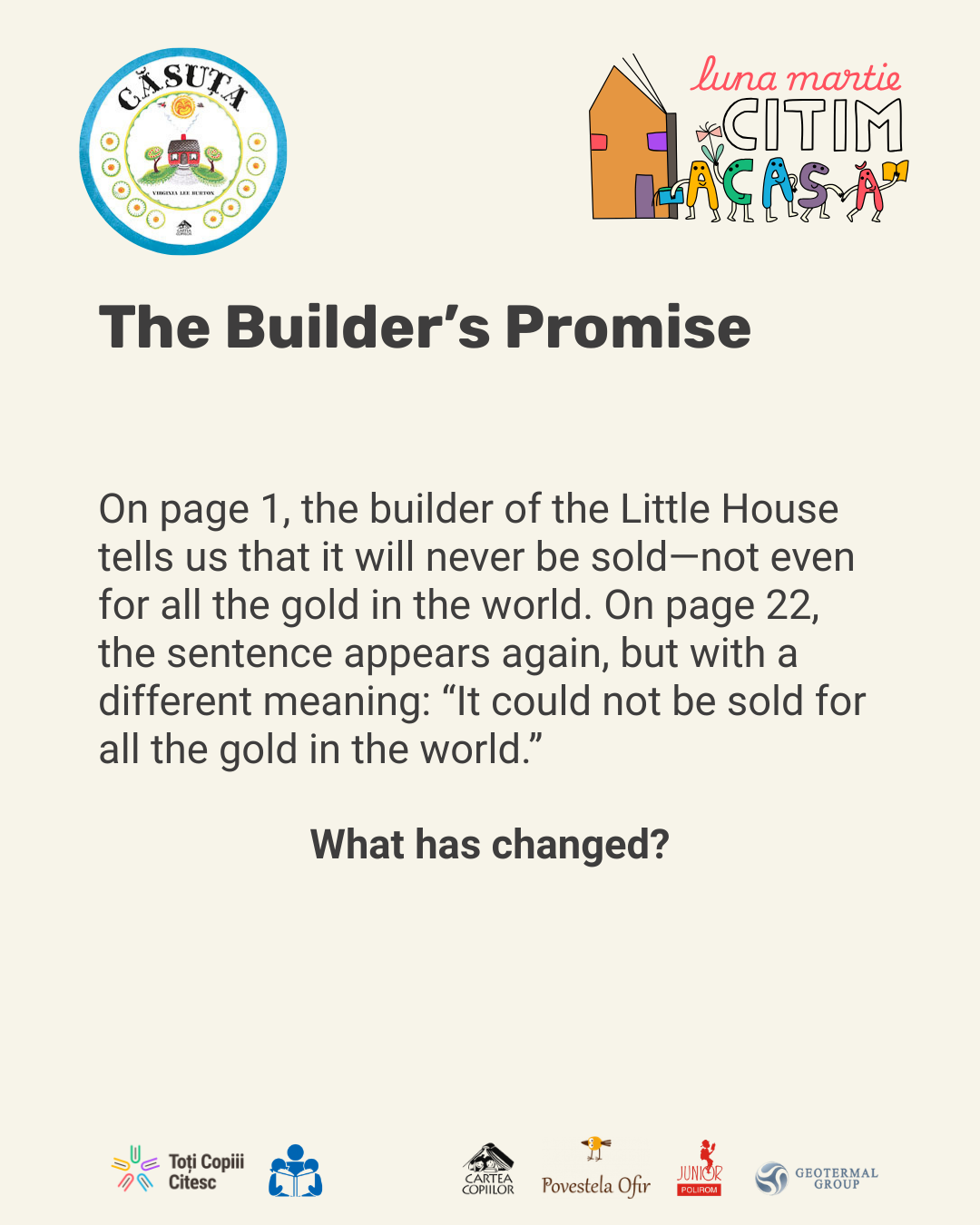
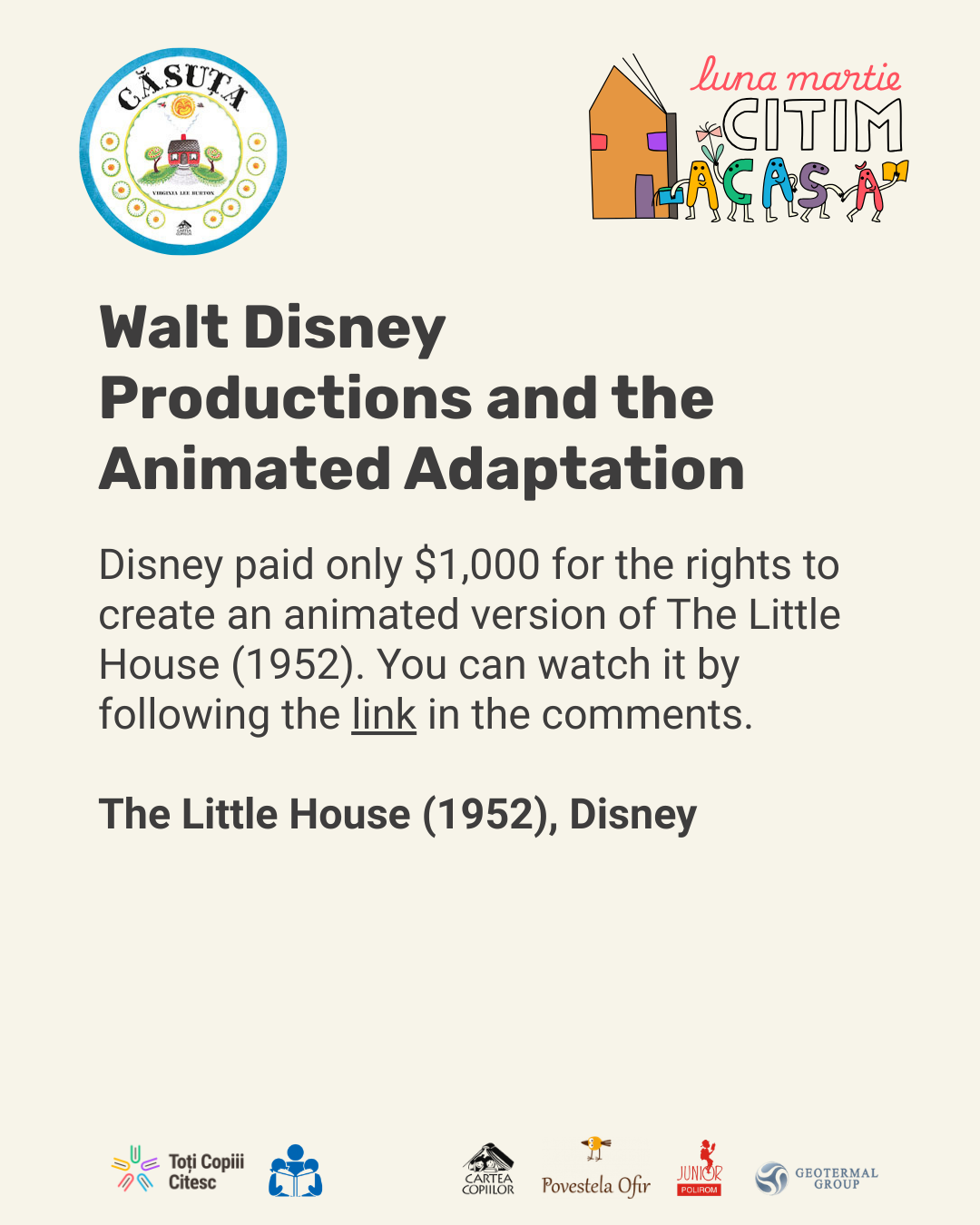
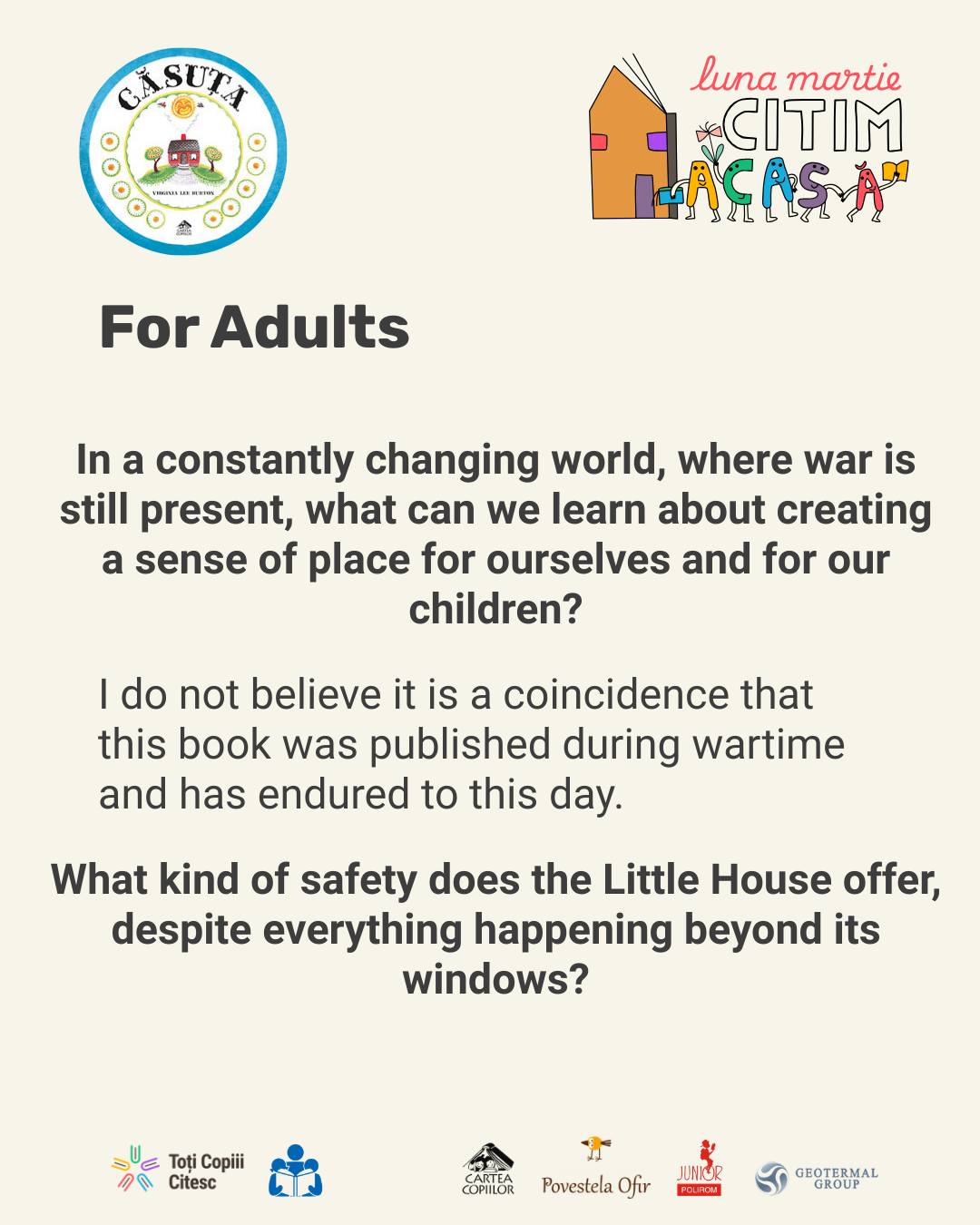
💡How can we bring the story to life?
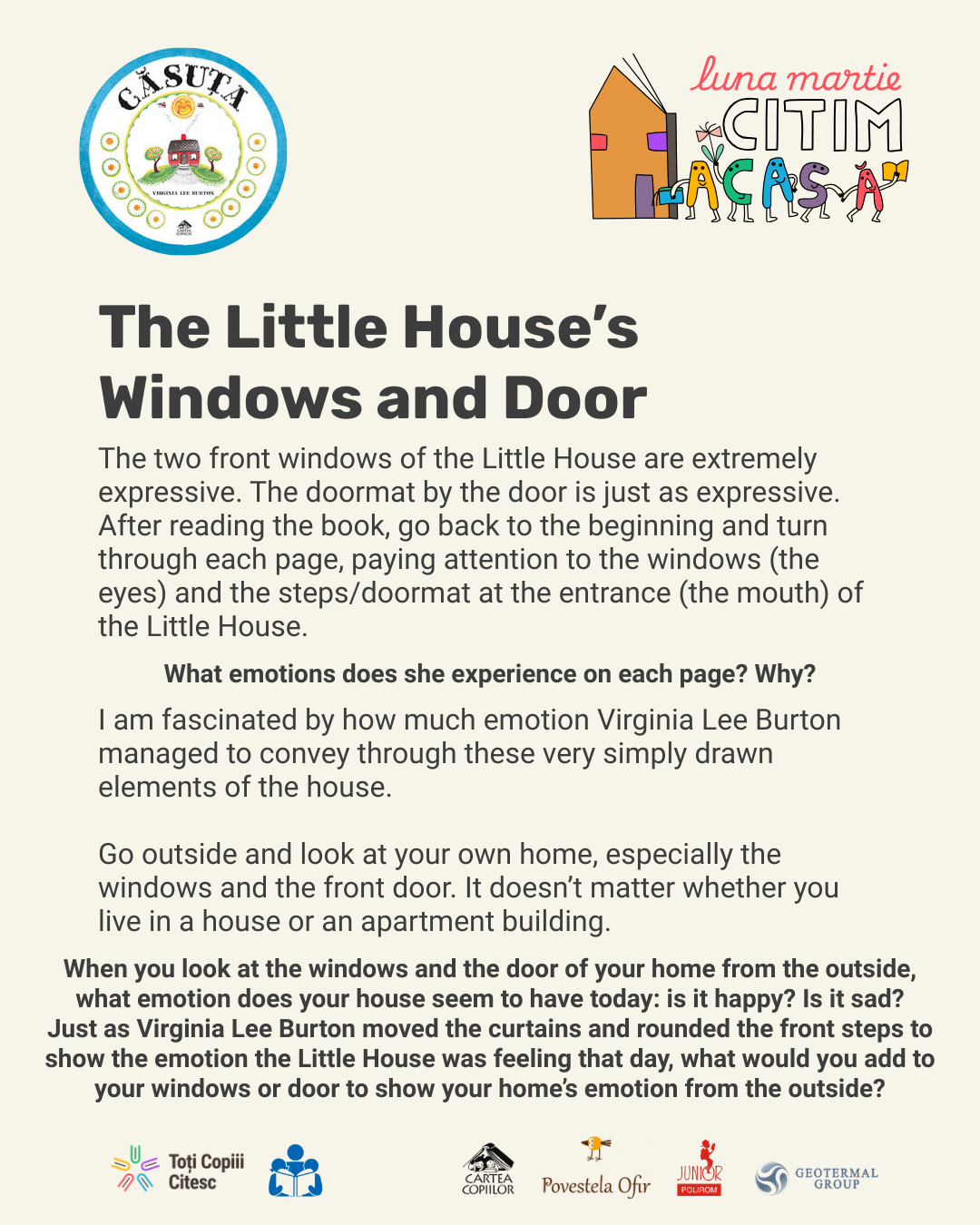
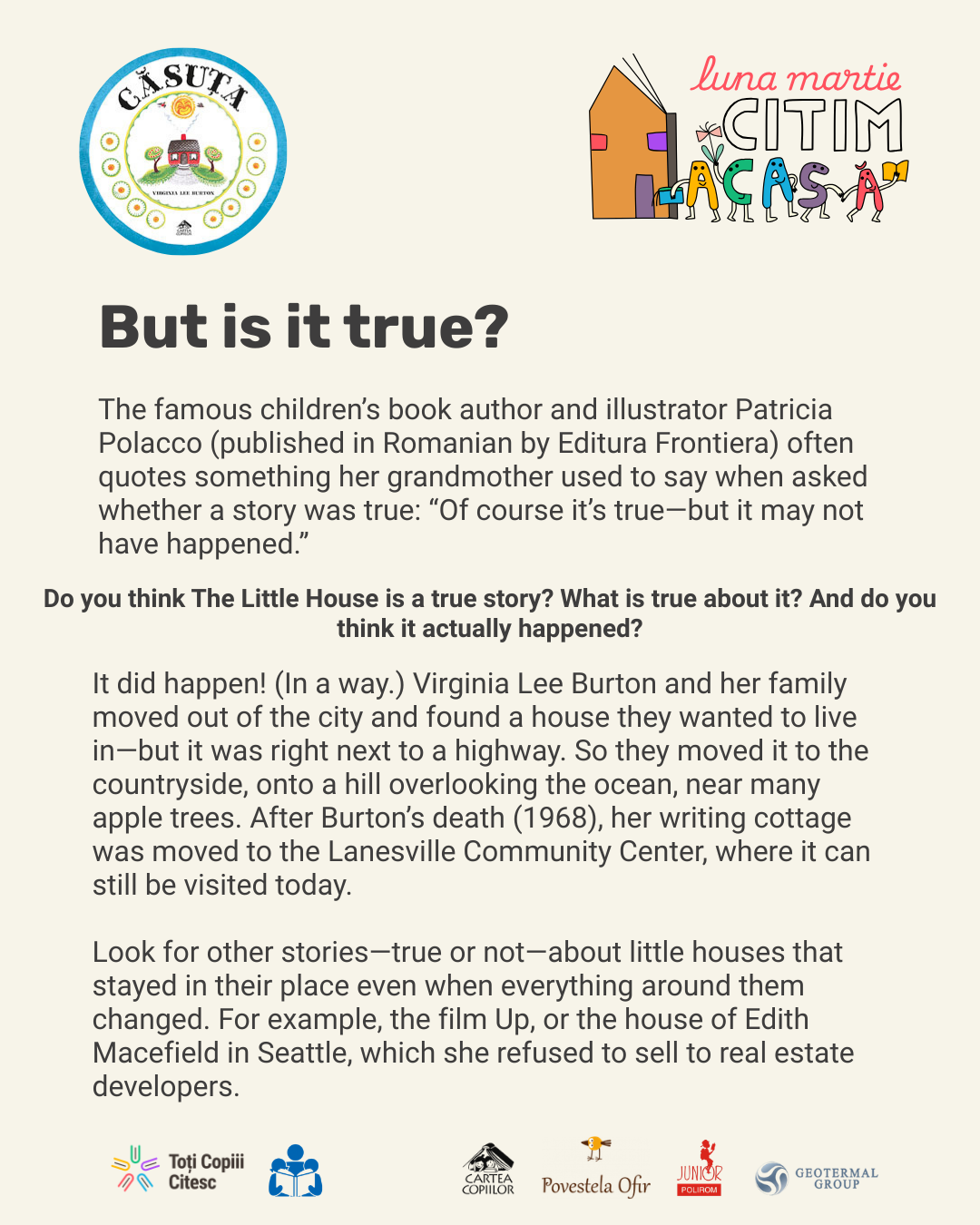
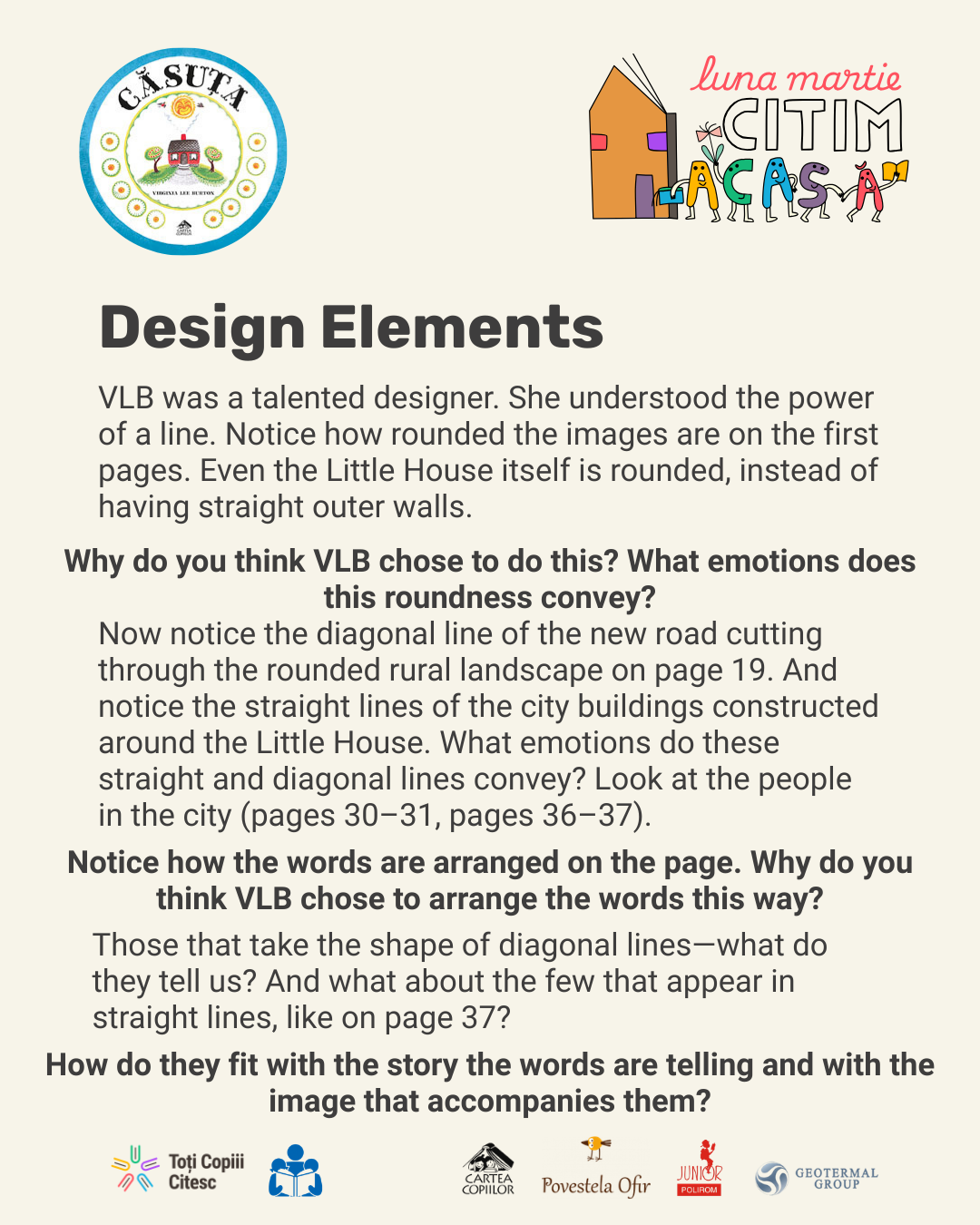
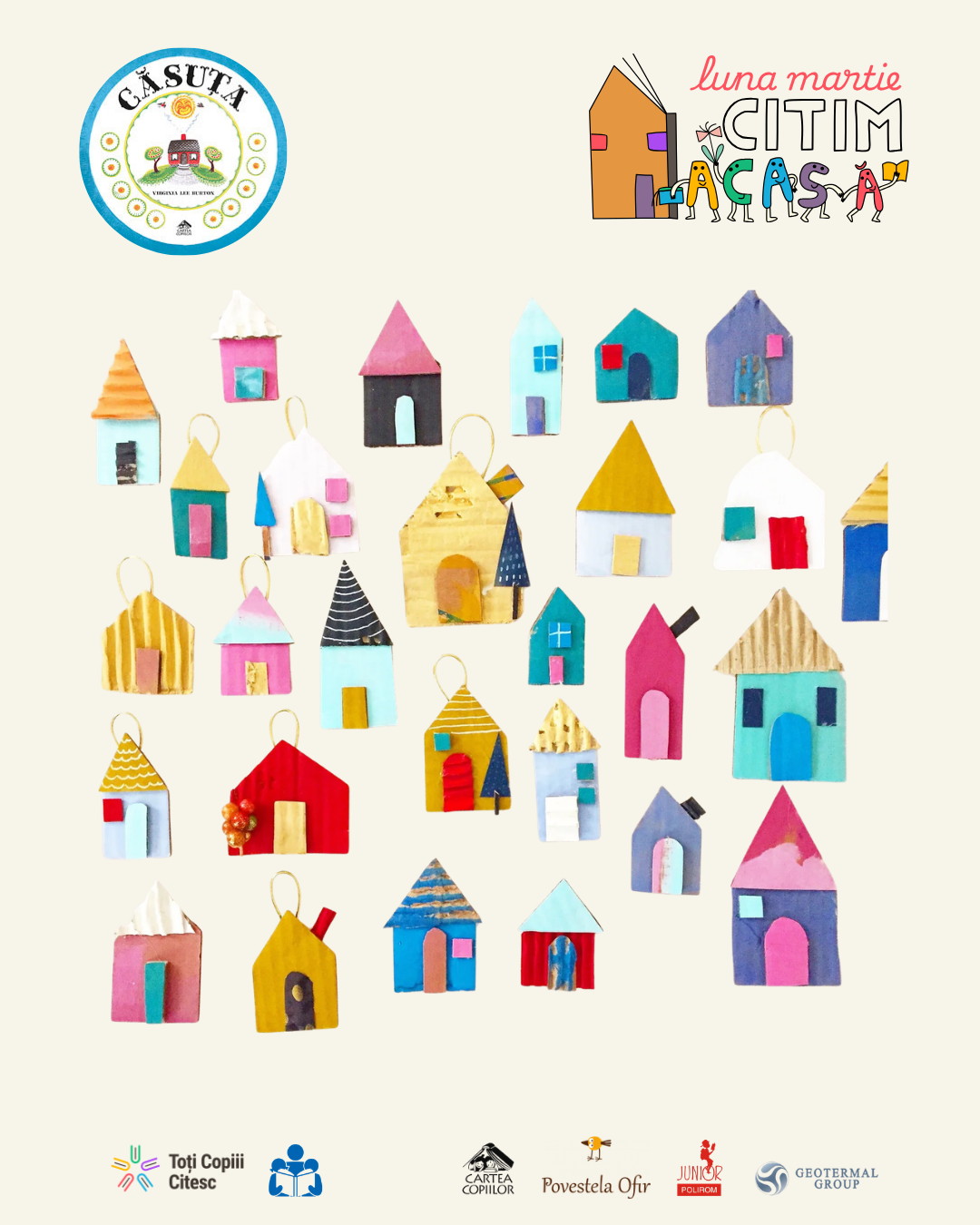
Discover in the gallery below 10 creative ideas and one special idea for parents on how to explore this wonderful book after reading it together!
SWIPE THROUGH THE IMAGES TO SAVE THEM ALL.